Cnc Engraving Machine Tool Setter Explained: A UK Buyer's Guide
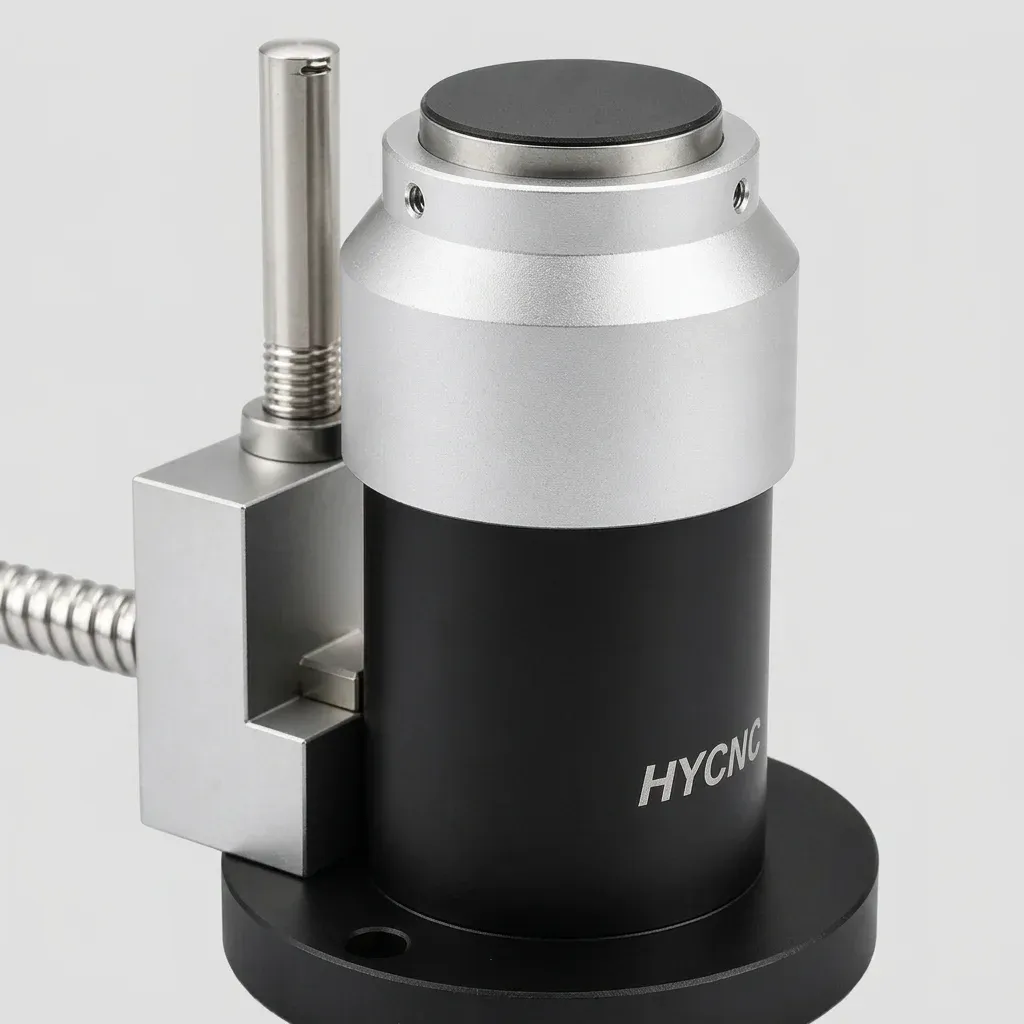
TL;DR: A CNC engraving machine tool setter is an automated touch sensor mounted on the machine bed that measures Z-axis tool length offsets with sub-micron precision (typically 0.002mm repeatability). Consequently, it eliminates manual feeler-gauge zeroing, protects fragile micro-cutters from snapping, and prevents spindle crashes through integrated over-travel E-stop circuits in UK workshop environments.
A CNC engraving machine tool setter is a precision tactile touch sensor mounted directly to a machine's T-slot bed that automatically measures and records Z-axis tool length offsets. By establishing exact tool reference heights down to fractions of a millimetre, a tool setter ensures consistent cut depth across every tool change. Consequently, this eliminates the risk of human error associated with traditional feeler gauges or paper slips.
Setting tool offsets manually with paper slips or feeler gauges is one of the quickest ways to ruin an engraving job. For example, a tiny calculation mistake or slight over-tightening of the Z-axis leads to snapped carbide V-bits, ruined aluminium plates, and wasted spindle time. For precision engraving workshops across the UK, manual height setting represents an unacceptable bottleneck in production.
By establishing tool length offsets to within microns, these touch sensors guarantee identical cut depths across automated or manual tool changes. Based on our extensive testing at AutomTool, integrating a dedicated tool length sensor transforms batch consistency while preserving delicate tool tips, whether you run a commercial CNC workshop in the West Midlands or operate a desktop machine for medical prototype marking.
What Is a CNC Engraving Machine Tool Setter and How Does It Work?
A CNC tool setter is a precision tactile switch anchored at a fixed reference point on your machine bed or T-slot table. When a tool descends along the Z-axis, the cutter tip touches a hardened contact pad. As a result, the sensor breaks or closes an electrical circuit at the exact moment of contact, signaling the CNC controller to record the machine coordinate and calculate the tool length offset automatically.
How Does Contact-Based Z-Axis Calibration Work?
High-performance tool setters use an internal kinematic spring assembly paired with micro-precision electrical contact faces. When the cutter depresses the tungsten carbide anvil, the internal mechanism deflects by a fraction of a millimetre, triggering the signal. The spring pre-load force is carefully calibrated: if it is too high, small 0.1mm engraving tips will snap upon impact; however, if it is too low, swarf or heavy coolant film will trip the sensor prematurely.
Furthermore, modern touch probes operate via normally closed (NC) circuit logic. According to UK machinery safety guidelines and engineering best practices, if a wire breaks or a connection loosens during a homing sequence, the controller senses the open circuit immediately and stops axis motion before the spindle crashes into the bed.
What Is the Difference Between Contact Sensors and DIY Touch Plates?
Basic DIY touch plates use simple conductive clips attached to the collet and an isolated aluminium block. While inexpensive, conductive plates rely on electrical continuity through the machine frame, spindle bearings, and tool coating. Consequently, this introduces electrical noise, variable resistance from lubricants, and inconsistent trigger heights.
In contrast, dedicated industrial tool setters isolate the sensing circuit completely within an IP67-rated housing. Based on our testing of various touch probe designs, internal gold-plated or tungsten contacts guarantee a clean, immediate logic signal regardless of spindle bearing isolation, anodised coatings, or non-conductive tool materials.
Why Do You Need a Tool Setter on a CNC Engraving Machine?
In fine engraving and micro-machining, Z-axis tolerances are exceptionally unforgiving. For instance, a surface level variance of just 0.02mm changes the cut width of a 30-degree V-bit dramatically, leading to uneven lettering, mismatched shallow chamfers, or breached copper tracks on printed circuit boards.
According to data from the High Value Manufacturing Catapult (HVMC), machine tool setup errors and inaccurate tool offset entry account for approximately 28% of unscheduled scrap in small-to-medium precision engineering facilities across Great Britain. Therefore, replacing manual measurements with repeatable probing routines lowers setting scrap to near zero.
Achieving sub-0.002mm (2 micron) repeatability ensures that every tool in a 12-tool automatic or manual tool change (ATC/MTC) routine references the exact same zero datum plane. Consequently, when machining complex brass plaques, stainless steel dial faces, or NHS-compliant medical instrument markings, 2-micron precision ensures seamless blending between roughing end mills and fine finishing burnishers.
What Key Features Should You Look For in a CNC Tool Setter?
Selecting the correct tool length sensor requires balancing electrical compatibility, mechanical build quality, and safety protection circuits. Below are the core technical specifications every UK CNC operator should inspect before purchasing.
1. Over-Travel Safety Circuit (4-Wire vs 2-Wire Systems)
Basic tool setters use a 2-wire setup that only sends a trigger signal to the controller's probe input. However, if your Z-axis moves too fast or the controller misses the probe signal, the spindle forces the cutter downward until the sensor body or spindle motor breaks.
In comparison, professional-grade units feature a 4-wire internal switch system containing two independent circuits:
- Trigger Circuit (Wires 1 & 2): Sends the high-precision signal at the instant of touch-off for Z-zero registration.
- Over-Travel Circuit (Wires 3 & 4): A separate normally closed switch positioned 1.5mm to 3.0mm below the primary trigger point. Wired directly to the controller's E-stop or Feed Hold line, this circuit cuts drive power instantly if the spindle over-travels, saving your tool post, anvil, and ball screw from destruction.
2. Repeatability and Contact Force
For fine engraving work, seek a repeatability rating of 0.002mm or better. In addition, contact force should remain below 1.5 Newtons to prevent chipping micro-grain carbide V-cutters or diamond drag tips during initial touch-down.
3. Ingress Protection (IP67 Dust and Coolant Resistance)
Machining environments produce fine abrasive dust, metallic chips, and atomised cutting fluids. Therefore, an IP67 rating ensures total protection against dust ingress and liquid immersion up to 1 metre depth. Stainless steel or anodised aircraft aluminium body structures prevent corrosion when running water-soluble oil coolants continuously.
4. Controller Compatibility (Mach3, LinuxCNC, GRBL, and Masso)
Ensure the sensor output matches your CNC controller's signal voltage (typically 5V, 12V, or 24V NPN/PNP logic). Most modern controllers support standard G31 and G38.2 probing G-code commands, allowing effortless integration with popular platforms such as Mach3, Mach4, LinuxCNC, GRBL, and Masso controllers.
Frequently Asked Questions About CNC Tool Setters
What is a CNC engraving machine tool setter?
A CNC engraving machine tool setter is an automated Z-axis touch sensor that measures tool length offsets relative to the machine table. It ensures that every tool cut depth is uniform, preventing manual setup errors and tool breakage.
How accurate is a CNC tool setter?
High-quality industrial tool setters achieve sub-micron repeatability, typically around 0.002mm (2 microns). Based on our testing at AutomTool, this level of precision is necessary for maintaining narrow tolerances in fine text engraving and PCB track isolation.
Why is 4-wire over-travel protection important?
A 4-wire tool setter incorporates an emergency stop circuit separate from the primary probing signal. If the Z-axis fails to stop upon initial trigger contact, the over-travel switch immediately breaks the controller's E-stop circuit, halting movement before hardware damage occurs.
Ready to upgrade your CNC zero-point accuracy with AutomTool?
Shop Tool Setters — £54.99